Natural Prayers
Review by Donna Seaman
Published in Ruminator Review, Spirit Matters, Winter 2001-2002, available in your local, independent bookstore now!
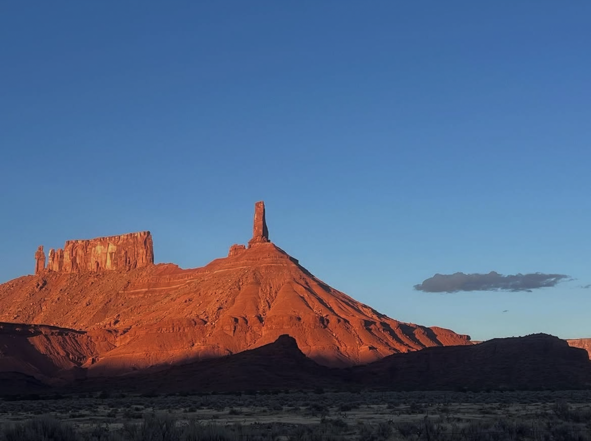
Terry Tempest Williams is a sixth-generation Mormon and a native of Utah's glorious redrock desert, a realm of dramatic, almost otherworldly beauty, a rich and resonant indigenous culture, and fierce conflicts over land use. Mary Rose O'Reilley was raised Catholic in Minnesota, a land of forests, lakes, farms, serious winters, and reticent Protestants. Both writers have struggled with their inherited faiths while navigating the confounding divide between religion and spirituality. Each has steeped herself in the world of books and felt compelled to augment feelings and ideas with intimate hands-on encounters with earth, water, animals, and plants. And in their new books, one a praise song to place, the other a spiritual autobiography, each transforms personal experiences into conduits for insights into what it means to be human and what humans mean when they speak of sacredness.
The author of such clarion and unprecedented works as Refuge, Williams is one of the world's most poetic and daring nature writers. The desert is in her blood, and she has devoted herself to studying its natural and human history and elucidating its spare and surprising beauty and the solace it grants to those who take the time to experience and treasure it. As with every other naturalist who writes about a wild place he or she reveresincluding Williams's fellow unbridled redrock champion, the late but still vital Edward Abbeycircumstances have conspired to force Williams to speak not just in praise but in defense of the Utah desert.
A potent collage of stories, essays, and testimony, Red: Passion and Patience in the Desert is an edgy and deeply personal call to action that feels as though it was pulled from Williams's mind, heart, and hands almost against her will. Having witnessed
the damage and suffered the consequences of careless environmental abuse and development, she has come to believe that love of place requires participation in public debate over the fate of wilderness, "the body of the beloved, not real estate." To that end, Williams testified before the Senate Subcommittee on Forest and Public Land Management in 1995, delivering an astonishingly lyrical speech that she has included in Red, a collection designed to answer the question of why we need wilderness and to spur readers to make their voices heard.
Williams begins by recounting the escalation of hostility and even outbreaks of violence in the West against employees of the U.S. Forest Service, the Bureau of Land Management, and other agencies involved in upholding the law by actually protecting protected lands. In an informational mode, one she returns to at the end of the book, she notes that whereas many Americans greeted with joy and relief President Clinton's creation of the Grand Staircase-Escalante National Monument, a preserve of almost two million western wildland acres, others resented what they viewed as federal interference in their lives and began plotting its demise. Then, in 1999, America's Redrock Wilderness Act was introduced to Congress, a bill Williams supports so fervently it became the catalyst for Red. It's risky business for an artist to create an overtly political work, but Williams is so passionate, intelligent, giving, and empathic, so arresting in her candor and dazzling in her uninhibitedness, that nothing here is simplistically propagandistic.
Whether she's writing essays, fables, or swatches of memoir, Williams achieves a stirring metronomic action, swinging rhythmically from rigorous observation and fact to flights of imagination and elucidations of feeling, from exterior to interior, from impression to conviction. After her opening salvo, she turns to "Coyote's Canyon," a set of previously published pieces blending essay with myth in shimmering tales that give voice to the spirit of the desert and catch fleeting glimpses of the long-lost Anasazi. New works, the beating heart of the book, follow. Highly concentrated and provocative thought pieces, they will readily engage Williams's admirers and undoubtedly rile her detractors.
Williams describes with poetic compression, keen pain, "revolutionary patience," and love the discord her belief in the sanctity of wilderness has aroused within her own family, many of whom work for the construction company her great-grandfather started nearly a century ago. She talks about her despair over the rampant new construction around her home in what used to be a peaceful canyon in Salt Lake City, then in "Ode to Slowness," she describes what she and her husband discover about the nature of light, silence, and time after they flee the hectic city for the stillness of a house in the desert. Moving even more boldly into the intersection of the private and the public, Williams explains her and her husband's unpopular decision not to have children, formulating an electrifying manifesto that redefines the notion of family to include all of earth's children, human and otherwise, by asking, "Must the act of birth be seen only as a replacement for ourselves? Can we not also conceive of birth as an act of the imagination, giving body to a new way of seeing? Do children need to be our own to be loved as our own?"
Speaking of love, of nexus, of connection, Williams ponders "our true erotic nature" and concludes that, at its essence, eroticism is about "being in relation" not only with another person but also with a landscape, a place. This is an ecological vision, a recognition that life is a totality made up of patterns of interrelationships that link organisms to each other and to their surroundings. Eroticism, Williams observes, helps us perceive and appreciate this vibrant mesh. It awakens our senses and "calls the inner life into play. No longer numb, we feel the magnetic pull in our bodies toward something stronger, more vital than simply ourselves."
Williams states, and rightly so, that "wildness is a deeply American value" and, further, that "we need wilderness in order to be more complete human beings." She embraces the wildness all around us and within herself, writing, even at her most measured and reasoned, in a state of ecstasy. Her readers must act in kind and give themselves over to her the way she gives herself over to the desert as her ardent language catches fire and illuminates a path to a wiser, more responsible and ethical involvement with nature, and with each other.
This essay is excerpted from a longer review that includes RED: Passion and Patience in the Desert, and The Barn at the End of the World: The Apprenticeship of a Quaker, Buddhist Shepherd,
by Mary Rose O'Reilley. Many thanks to Ruminator Review for graciously granting permission to reprint this review here. © Ruminator Review, 2001.